

If you’ve ever closed a slow website in frustration, you already understand why speed matters. People today expect everything to load instantly — food, rides, messages, and yes, websites too. The internet has become a place where visitors make decisions in seconds. If your website isn’t fast enough, they won’t wait. They’ll simply leave.
Website speed isn’t just a technical issue. It affects your brand, sales, customer trust, and even your ranking on Google. And the best part? Speed is something you can control. In this blog, let’s break down why speed is a big deal, how it influences your business, and what you should do about it.
1. First Impressions Happen Faster Than You Think
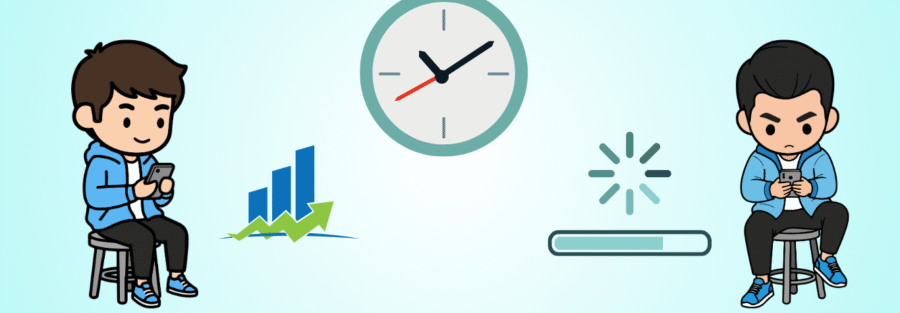
A visitor lands on your website. They wait. One second. Two seconds. By the third second, their patience starts slipping. Studies show that most users decide whether they’ll stay or leave within just a few seconds.
A slow website gives the impression that your business is outdated, careless, or unreliable. A fast website, on the other hand, feels clean, modern, and professional. People trust brands that load fast because it shows attention to detail.
Your website speed is your first handshake. Make sure it’s firm.
2. Slow Websites Lose Real Money
Speed isn’t just a technical metric — it’s directly connected to revenue.
When your pages load slowly, customers don’t browse, don’t sign up, and don’t buy. This is called a high bounce rate, and it kills conversions.
- An online store with slow product pages loses shoppers before they even see the price.
- A service provider loses leads who won’t fill out a form because the site feels “laggy.”
- A restaurant loses orders because customers don’t want to wait for the menu to load.
Every extra second of delay means fewer sales, fewer leads, and fewer opportunities.
Fast websites convert better — always.
3. Speed Is a Major SEO Ranking Factor
Google’s job is to give users the best experience, and a slow website is not a good experience. That’s why page speed is one of the most important ranking factors for SEO.
If your website is slow:
- Google pushes your site lower.
- Competitors show up above you.
- You get fewer organic visitors.
Even if your content is great, speed can hold you back.
A fast website, however:
- Ranks higher
- Gets more visibility
- Attracts more quality traffic
Speed and SEO go hand in hand.
4. Mobile Users Expect Even Faster Websites
More than half of all internet traffic comes from mobile devices. If your website isn’t optimized for mobile speed, you’re losing a huge number of potential customers.
Mobile visitors often browse while walking, traveling, or multitasking. They have less patience. A slow site on mobile feels 10 times slower.
With mobile-first indexing, Google also checks your mobile speed before ranking you.
If your site works fast on phones, you win.
5. Fast Websites Improve User Experience (UX)
A fast website doesn’t just load quickly — it feels good to use. Buttons respond instantly. Images appear smoothly. Pages scroll without lag.
Good user experience leads to:
- More time on site
- More page views
- More engagement
- Better brand perception
When users enjoy the experience, they come back. Slow websites feel heavy and annoying. Nobody returns to frustration.
6. Customers Trust Fast Websites More
Would you trust a bank whose website takes forever to load? Would you order from an online store that feels outdated?
Speed builds credibility. It signals professionalism, stability, and care. When a website loads quickly, customers feel secure enough to sign up, make a purchase, or share their information.
Trust is built in seconds — and speed plays a big part in that.
7. Speed Helps Your Marketing Perform Better
Every marketing campaign — Facebook ads, Google ads, email marketing, SEO — depends on a fast website.
Imagine paying for ads only to have visitors drop off because your website loads too slowly. That’s money wasted.
A fast website improves:
- Landing page conversions
- Ad Quality Score
- Lead generation
- Sales funnels
Your marketing performs better when your website does too.
8. Speed Is Often an Easy Win
The good news? Improving website speed doesn’t always require rebuilding everything. Sometimes simple fixes create huge results:
- Compressing images
- Cleaning unnecessary plugins
- Using proper hosting
- Implementing caching
- Minimizing scripts
- Optimizing your design
These small adjustments can transform your site from slow to lightning-fast.
Speed is one of the easiest improvements with the biggest impact.
9. Your Competitors Are Getting Faster — You Should Too
Customers compare brands without even realizing it. If your competitor’s website is fast and yours isn’t, guess who wins the customer?
Fast websites stand out. They keep visitors longer, guide them smoothly, and convert them better.
If you care about staying ahead, speed is not optional.
Conclusion: Speed Is Not a Feature — It’s a Requirement
Your website represents your business. Whether you sell products, offer services, or build a brand, speed plays a major role in your success. A fast website helps you rank higher, convert better, and build trust with your audience.
In a world where attention spans last seconds, speed is your superpower. If your site loads fast, people stay. If it doesn’t, they’re gone.
A fast website isn’t just a bonus — it’s the foundation of a strong online presence.