
In today’s digital world, having a website is not enough. You need a website that loads fast, ranks high, keeps users engaged, and turns traffic into customers.
That’s where powerful Web Development + SEO integration comes in.
Many businesses either focus only on development… or only on SEO.
But real results happen when both work together from Day 1.
In this blog, you’ll learn why SEO-ready development is the future, what steps go into it, and how you can build a site that performs, ranks, and converts.
1️⃣ Why Your Website Needs Both Web Development & SEO Working Together
Most websites fail because:
- They are designed beautifully but don’t rank
- Or they have SEO keywords but don’t convert visitors
- Or they load slowly and Google pushes them down
When you integrate SEO directly into the development process, your website becomes:
✅ Faster
✅ More visible
✅ Easier to navigate
✅ Stronger at converting visitors
✅ Better aligned with search engines
Google now ranks websites based on UX (User Experience), Core Web Vitals, and content relevance.
So, if your site is not built with SEO structure from the beginning, you’re losing traffic every day.
2️⃣ The Foundation of SEO-Ready Web Development (The Core Pillars)
A converting website requires six essential elements, built into the structure:
🔹 1. A Strong Technical Foundation
- Clean HTML structure
- Schema markup
- Proper header hierarchy (H1 → H6)
- Secure HTTPS
- XML Sitemap
- Robots.txt
These tell Google what your website is about.
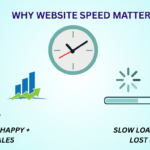
🔹 2. Speed Optimization
A slow website kills conversions.
Your site must have:
- Optimized images
- Minified CSS/JS
- Caching setup
- CDN integration
- Lightweight theme or custom build
Fast sites = More rankings + More sales.
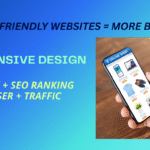
🔹 3. Mobile-First Responsive Design
Over 70% of users browse from mobile.
Google ranks your mobile version first (Mobile-First Indexing).
Your UX must be:
- Clean
- Scroll-friendly
- Touch-optimized
- Fast-loading
🔹 4. Content Architecture & Keyword Mapping
Every page must be built around keywords:
- Homepage → Brand + service keywords
- Service pages → Intent-based keywords
- Blogs → Long-tail informational search terms
Proper mapping allows Google to understand your topical authority.
🔹 5. Conversion-Focused UI/UX
SEO brings visitors.
UX converts them into buyers.
High-converting pages include:
- Clear CTAs
- Trust badges
- Social proof
- Clean layout
- Scan-friendly text
- Hero sections with value proposition
🔹 6. Tracking, Analytics & Heatmaps
A converting website must track behavior:
- Google Analytics
- Google Search Console
- Meta Pixel
- Hotjar heatmaps
These help you optimize continuously.
3️⃣ Step-by-Step Guide: How to Build an SEO-Optimized Website (Perfect for Agencies & Businesses)
Follow this blueprint for the strongest results:
Step 1: Keyword Research & Competitor Audit
Before designing anything, find:
- Your niche keywords
- Search intent
- Competitor rankings
- Content gaps
- Traffic opportunities
This research will guide your entire site structure.
Step 2: SEO-Based Website Planning
Plan your site pages based on keyword clusters:
- Home
- About
- Services
- Service 1
- Service 2
- Service 3
- Blog
- Contact
- Location pages (if needed)
This creates a strong information architecture.
Step 3: UX Wireframe + UI Mockup
Design your site based on user journey:
- What they see first
- What they click next
- What action you want them to take
Your design must visually support ranking + conversion.
Step 4: Development With SEO Rules
During the build, include:
- Clean code
- Image compression
- Lazy loading
- Fast hosting setup
- Proper header tags
- Internal linking logic
- Schema integration
This eliminates future SEO issues.
Step 5: On-Page SEO for Each Page
Each page should include:
- One main H1
- Keyword-rich headings
- Strategically placed CTAs
- Meta title + description
- Alt text
- Internal links
- FAQs with Schema
Step 6: Performance Optimization
After development:
- Test speed with GTmetrix
- Fix Core Web Vitals
- Compress all assets
- Ensure responsive design
Step 7: Launch & Tracking Setup
Before going live:
- Submit sitemap
- Connect Analytics
- Connect Search Console
- Set up heatmaps
- Add website security
Now your site is ready to rank and convert.
4️⃣ How SEO + Web Development Boosts Your Conversions
When these two work together, you get:
✔ Higher Google Rankings
SEO-driven structure + fast website = more organic traffic.
✔ Better User Experience
Lower bounce rate → Higher conversions.
✔ Faster Load Speed
A 1-second delay reduces conversions by 7%.
✔ Improved Customer Trust
Clean UI/UX increases credibility.
✔ More Sales & Leads
SEO brings traffic, UX turns them into customers.
Conclusion: Your Website Should Be a Growth Machine — Not Just a Design
Modern websites must be designed with purpose.
A combination of:
- Smart development
- SEO architecture
- Fast website speed
- High-quality content
- Clean UX
…creates a website that actually converts, not just looks pretty.
If you build your website with SEO from the beginning, you’ll always stay ahead of your competitors — and Google will reward you with long-term organic growth.
Conclusion: Your Website Should Be a Growth Machine — Not Just a Design
Modern websites must be designed with purpose.
A combination of:
- Smart development
- SEO architecture
- Fast website speed
- High-quality content
- Clean UX
…creates a website that actually converts, not just looks pretty.
If you build your website with SEO from the beginning, you’ll always stay ahead of your competitors — and Google will reward you with long-term organic growth.